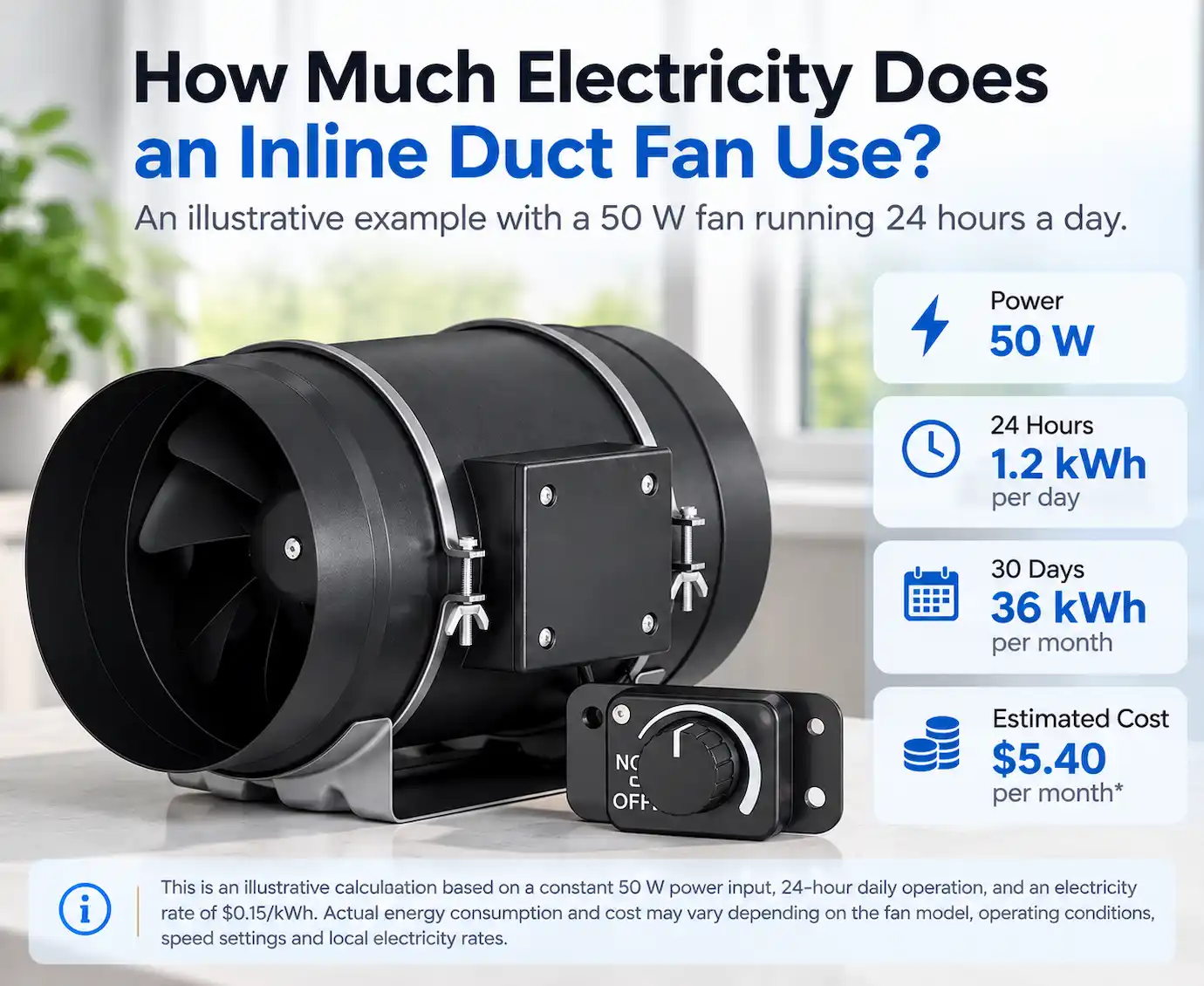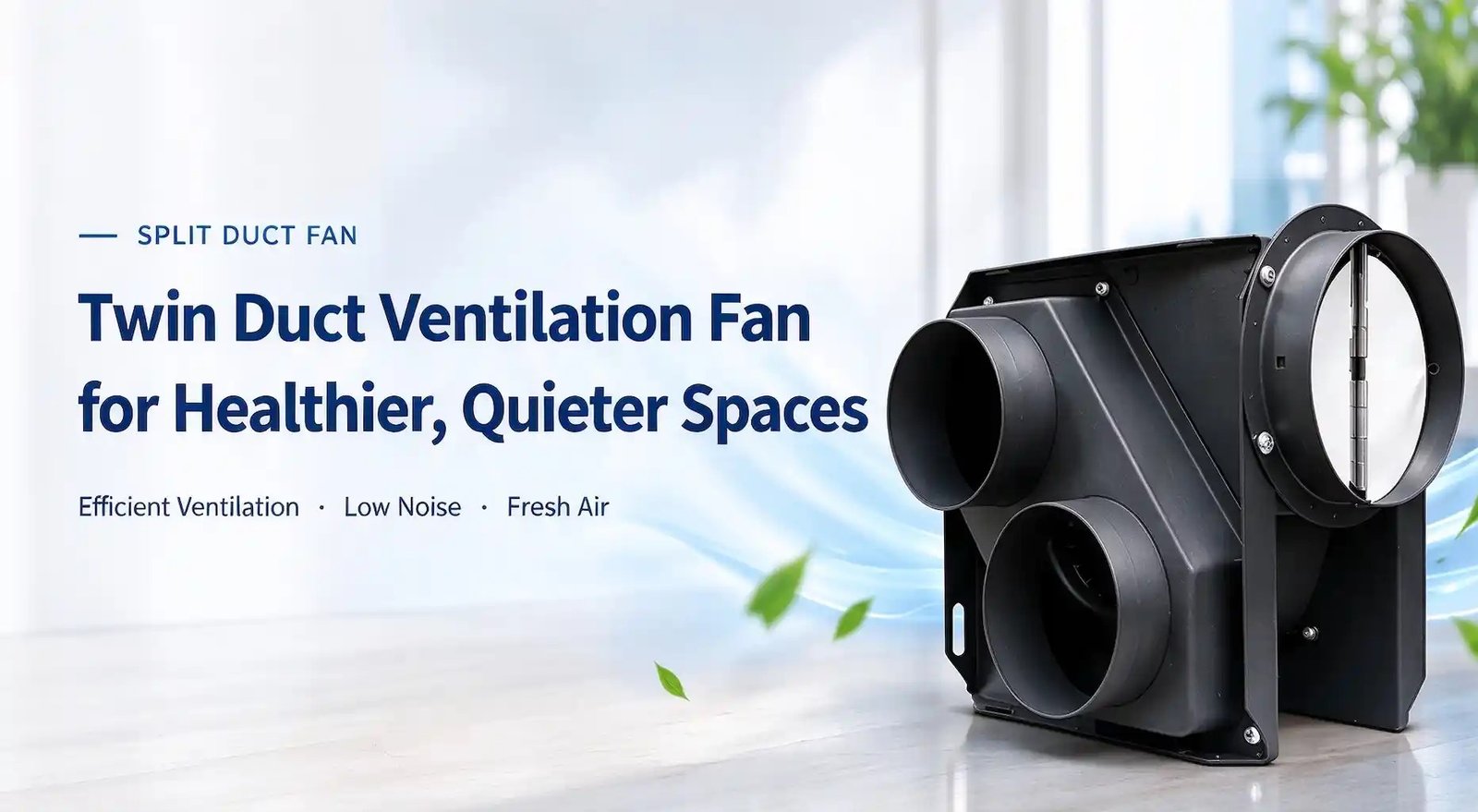
An inline duct fan is a ventilation device installed directly inside a duct system to move air from one point to another. Unlike wall-mounted or ceiling-mounted exhaust fans, it sits within the ductwork itself—making it the engine of any remote exhaust, supply air, or ducted ventilation system.
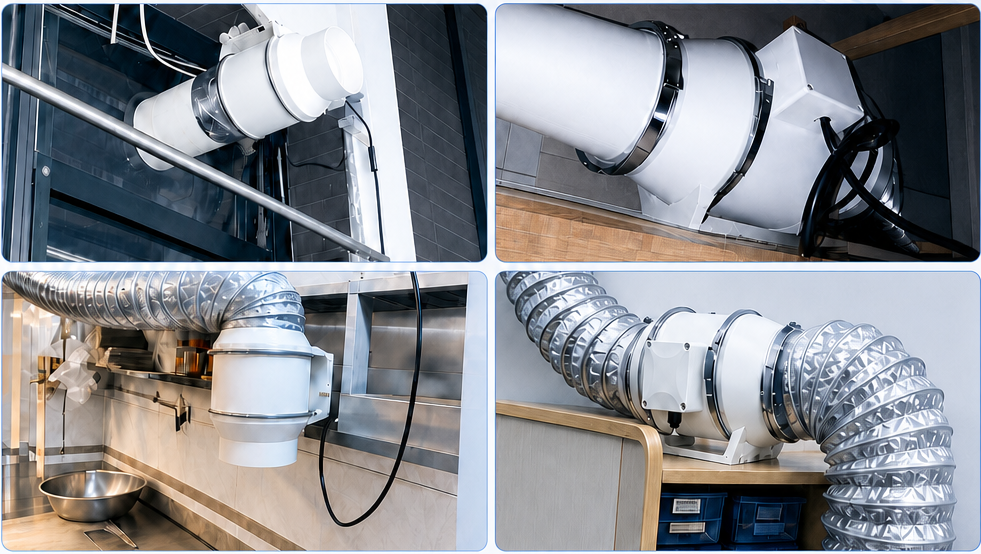
1.How Does an Inline Duct Fan Work?
An inline fan operates by drawing air through the duct on one side and pushing it out on the other. Because the motor and impeller are housed inside a cylindrical casing that matches standard duct diameters (typically 100 mm to 315 mm), it creates a seamless, low-resistance path for air movement.
2.How to Select the Right Fan?
Match these five variables to your project:
Application: Wet environments need moisture-resistant housings; continuous operation needs EC motors
Airflow (CMH/CFM): Calculate air changes per hour for the space
Static pressure: Account for duct bends, length, and filters
Duct size: Match fan diameter to your ductwork
Duct length: Longer runs need higher-pressure centrifugal models
3.Key Features to Look For
Premium motor technology: Pure copper windings, lower heat, and longer service life
EC motor option: Up to 50% more efficient than AC motors, with soft-start and speed control
Thermal overload protection: Prevents burnout if airflow is blocked
Vibration-dampening mounts: Reduce structure-borne noise in ceiling installations
4.Common Applications
Bathroom exhaust: Removing humid air through long ceiling ducts
Toilet ventilation: Odor control with no direct exterior wall
Kitchen ventilation: Extracting cooking fumes via overhead canopies
Commercial spaces: Office, retail, and hospitality environments
Indoor cultivation: Managing heat, humidity, and CO₂
Fresh air supply: Delivering filtered outdoor air to occupied zones