Can an Inline Duct Fan Run 24/7?
Inline duct fans are commonly used in residential and commercial ventilation systems. Some operate only when needed, while others may be required to run for extended periods.
So, can an inline duct fan run continuously?
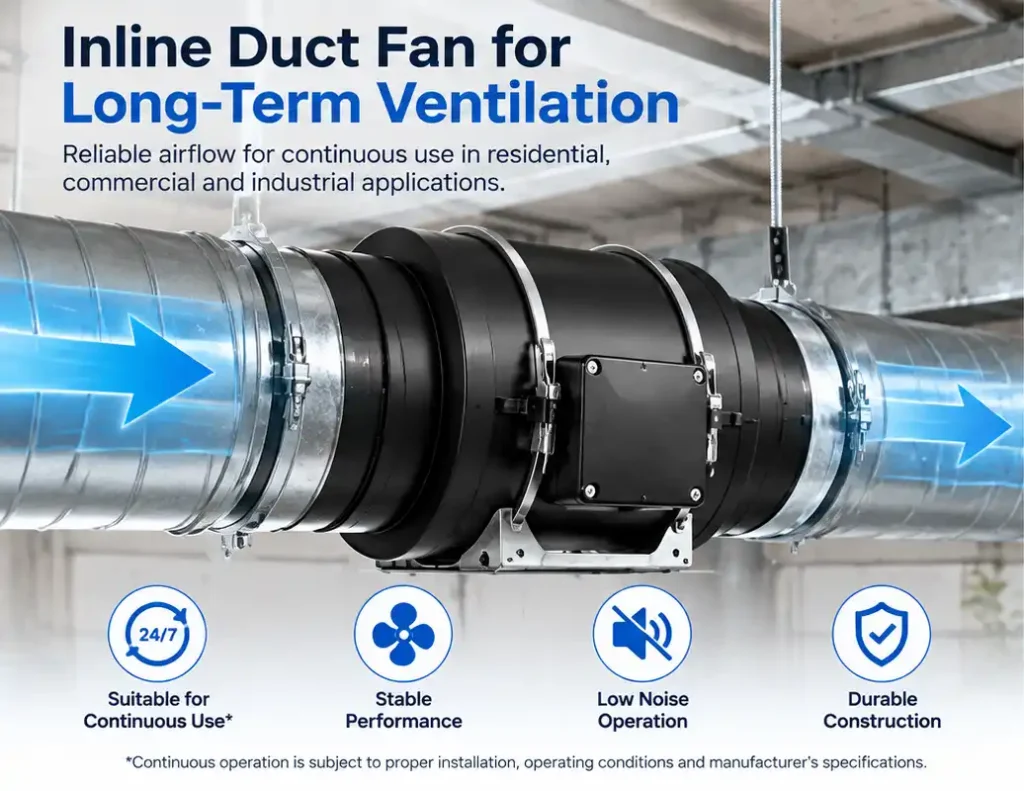
Yes, provided the fan is specifically designed and rated for continuous operation under the intended conditions.
Fans with suitable continuous-duty motors and components can operate for extended periods without requiring regular shutdowns for cooling. However, not every inline duct fan is suitable for 24/7 operation.
Always check the manufacturer’s specifications before using a fan continuously.
What Affects Continuous Fan Operation?
Several factors influence the reliability of an inline duct fan during long-term operation.
1. Motor Design
A motor with an appropriate continuous-duty rating, commonly designated S1, is designed for sustained operation under specified conditions. The complete fan assembly must also be suitable for continuous use.
2. Operating Temperature
High ambient temperatures can affect motor cooling and component lifespan. Fans should operate within the manufacturer’s specified temperature limits.
3. Installation Conditions
Secure mounting, proper electrical connections, and installation according to manufacturer instructions help maintain reliable operation.
4. Regular Maintenance
Dust buildup, unusual vibration, and worn components can affect performance. Periodic inspection helps identify potential problems early.
Does Running a Fan Continuously Reduce Its Lifespan?
Continuous operation increases the number of operating hours accumulated by the fan.
For example, a fan running 24 hours per day operates approximately 8,760 hours per year, compared with 2,920 hours for a fan running eight hours daily.
However, operating hours alone do not determine lifespan. Motor quality, temperature, bearing design, and maintenance also play important roles.
A properly rated fan can be suitable for long-term operation, while an unsuitable fan may experience overheating or premature failure.
How Much Electricity Does an Inline Duct Fan Use?
Electricity consumption depends on the fan’s actual input power and operating time.
The calculation is:
Energy Consumption (kWh) = Power (W) × Operating Hours ÷ 1,000
For example, consider a 50 W inline duct fan operating continuously.
| Operating Period | Energy Consumption |
|---|---|
| 24 hours | 1.2 kWh |
| 30 days | 36 kWh |
| Estimated monthly cost | $5.40 |
The estimated cost assumes an electricity rate of $0.15/kWh.
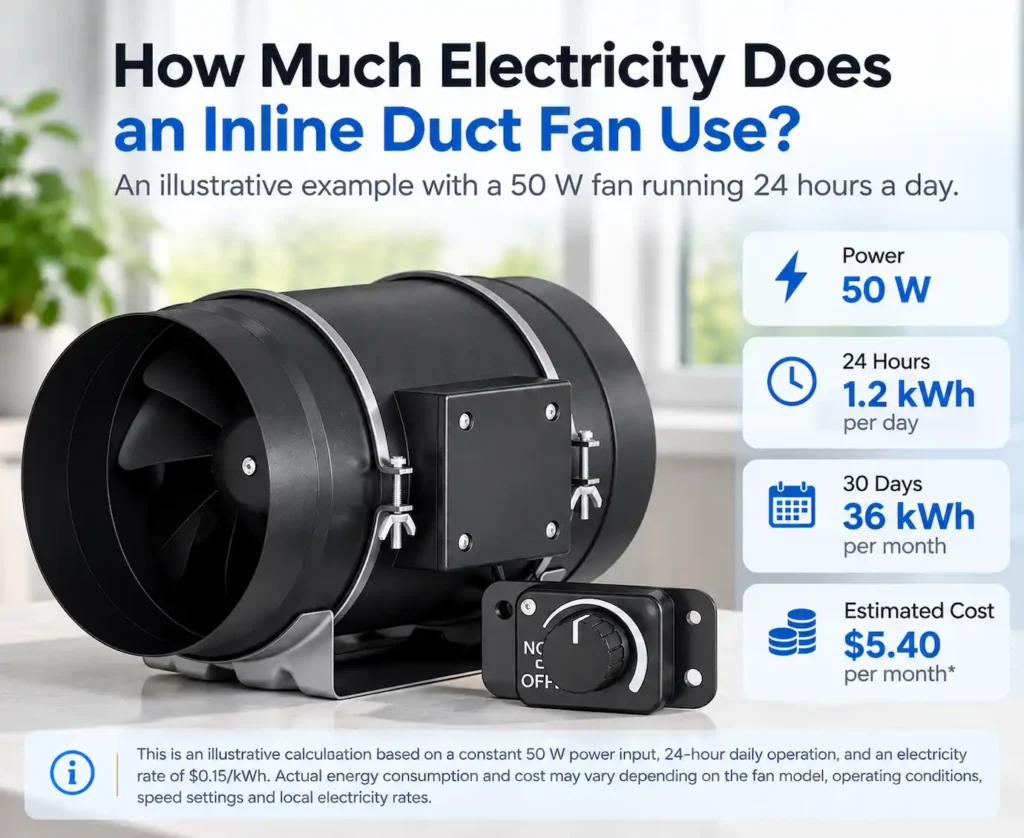
These figures are illustrative. Actual energy consumption depends on the fan model, speed settings, and operating conditions.
Maintenance Tips for Continuous Operation
To support reliable long-term operation:
- Inspect the fan periodically for dust accumulation and damage.
- Check for unusual noise, vibration, or overheating.
- Keep mounting brackets and duct connections secure.
- Follow the manufacturer’s cleaning and maintenance instructions.
- Stop operation and arrange professional inspection if electrical or mechanical faults appear.
A regular maintenance routine can help reduce unexpected downtime and extend equipment service life.
Conclusion
An inline duct fan can run continuously if it is designed and rated for 24/7 operation under the intended conditions.
Motor design, temperature, installation quality, and maintenance all affect long-term reliability.
Before selecting a fan for continuous ventilation, confirm its operating rating and follow the manufacturer’s recommendations.