
Good indoor air quality depends on effective ventilation. Whether in residential buildings, offices, or commercial facilities, a reliable ventilation system helps remove stale air and maintain a more comfortable indoor environment. A split duct fan with a twin-outlet design offers a flexible solution for applications that require airflow distribution to multiple areas.
What Is a Split Duct Fan?
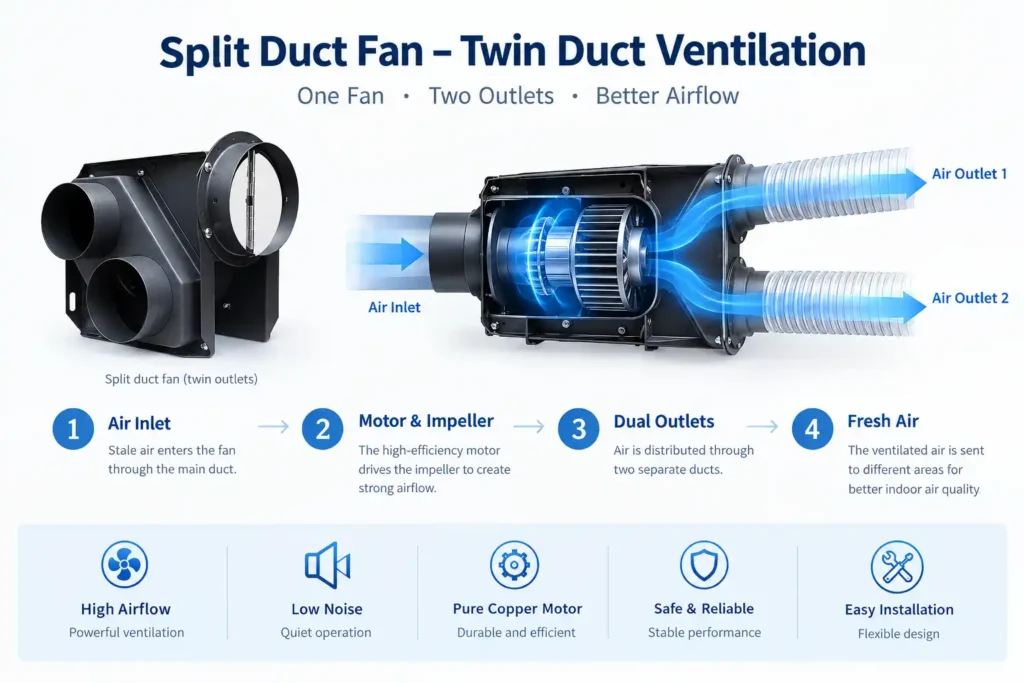
A split duct fan is designed to work with a duct ventilation system, allowing air to be distributed through separate duct connections. In a twin-outlet configuration, one fan unit can serve two ventilation branches, helping simplify duct layouts and reduce the need for separate fan installations in suitable applications.
Compared with conventional single-outlet arrangements, this design provides greater flexibility when planning ventilation for multiple rooms or extraction points. Actual airflow distribution depends on duct length, resistance, outlet design, and system configuration.
Key Benefits of a Twin Duct Ventilation Fan
1. Flexible Dual-Outlet Design
The twin-outlet structure allows the fan to connect to two duct branches, making it suitable for ventilation layouts that serve multiple locations. It can help simplify system planning in homes, offices, and other buildings where space and installation flexibility matter.
2. Effective Airflow Performance
A well-matched ventilation fan helps move stale air and support continuous air exchange. Selecting the correct fan requires considering both the required airflow and the static pressure of the complete duct system, rather than relying on airflow ratings alone.
3. Quiet and Comfortable Operation
Noise is an important consideration in residential and commercial ventilation. Proper fan selection, secure mounting, vibration control, and correctly sized ductwork can help reduce operating noise and improve the overall user experience.
4. Reliable Motor Performance
Motor quality affects operating stability, energy consumption, and service life. When choosing a split duct fan, check the motor specifications, rated power, operating speed, and maintenance requirements to ensure the product matches the intended application.
5. Flexible Installation and Maintenance
The split design can accommodate different duct arrangements, depending on the available installation space and connection sizes. Providing sufficient access for inspection and maintenance can also make long-term operation more convenient.
Where Can a Split Duct Fan Be Used?
A twin duct ventilation fan can be considered for a variety of applications:
- Residential buildings: Supporting ventilation in bathrooms, utility rooms, and other suitable indoor spaces.
- Offices: Helping improve air exchange in enclosed work areas.
- Commercial buildings: Supporting ventilation in service rooms and other designated spaces.
- Warehouses and workshops: Providing localized extraction or air movement where the fan’s performance matches the ventilation requirements.
For applications involving fumes, grease, corrosive gases, or high temperatures, confirm that the fan materials and operating specifications are suitable before installation.
How to Choose the Right Split Duct Fan
Before purchasing a twin duct fan, consider these essential factors:
- Airflow capacity: Estimate the ventilation demand of the spaces being served.
- Static pressure: Account for duct length, bends, filters, grilles, and other sources of resistance.
- Duct connections: Verify the inlet and outlet dimensions and compatibility with the ductwork.
- Noise level: Check the rated noise level and consider the actual installation environment.
- Motor and power supply: Confirm voltage, frequency, power consumption, and operating requirements.
- Installation conditions: Ensure the mounting arrangement and maintenance access meet project needs.
Because two duct branches may have different resistance levels, the airflow may not divide equally between them. Proper duct design and balancing can help achieve the intended ventilation performance.
Conclusion
A split duct fan with a twin-outlet design offers a practical option for ventilation systems that need flexible airflow distribution through two duct branches. With suitable airflow capacity, pressure performance, motor specifications, and installation design, it can support effective ventilation across a range of residential and commercial applications.
Looking for a ventilation solution for your project? Contact our team to discuss duct connection sizes, airflow requirements, motor options, and other product specifications.