What Is a Backdraft Damper?
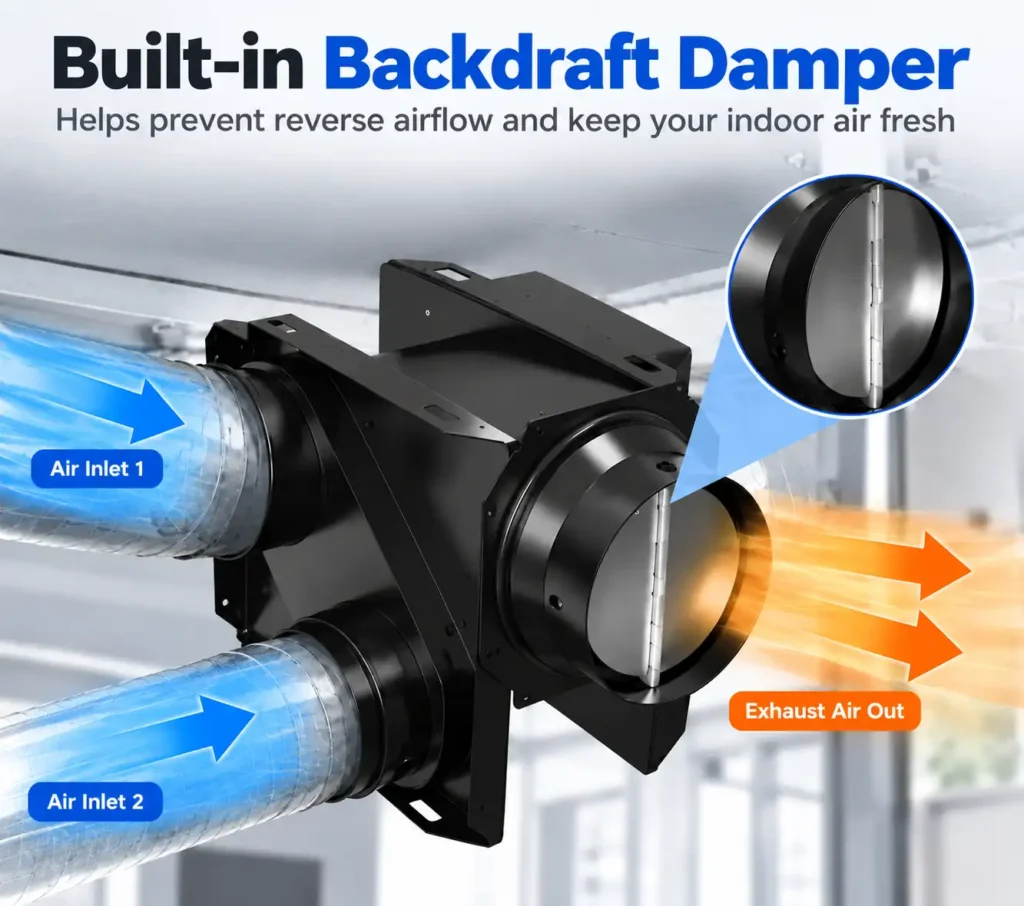
A backdraft damper is a ventilation component designed to allow air to flow in one direction while restricting airflow in the opposite direction.
It is commonly installed in exhaust ducts, ventilation outlets, and systems connected to inline duct fans.
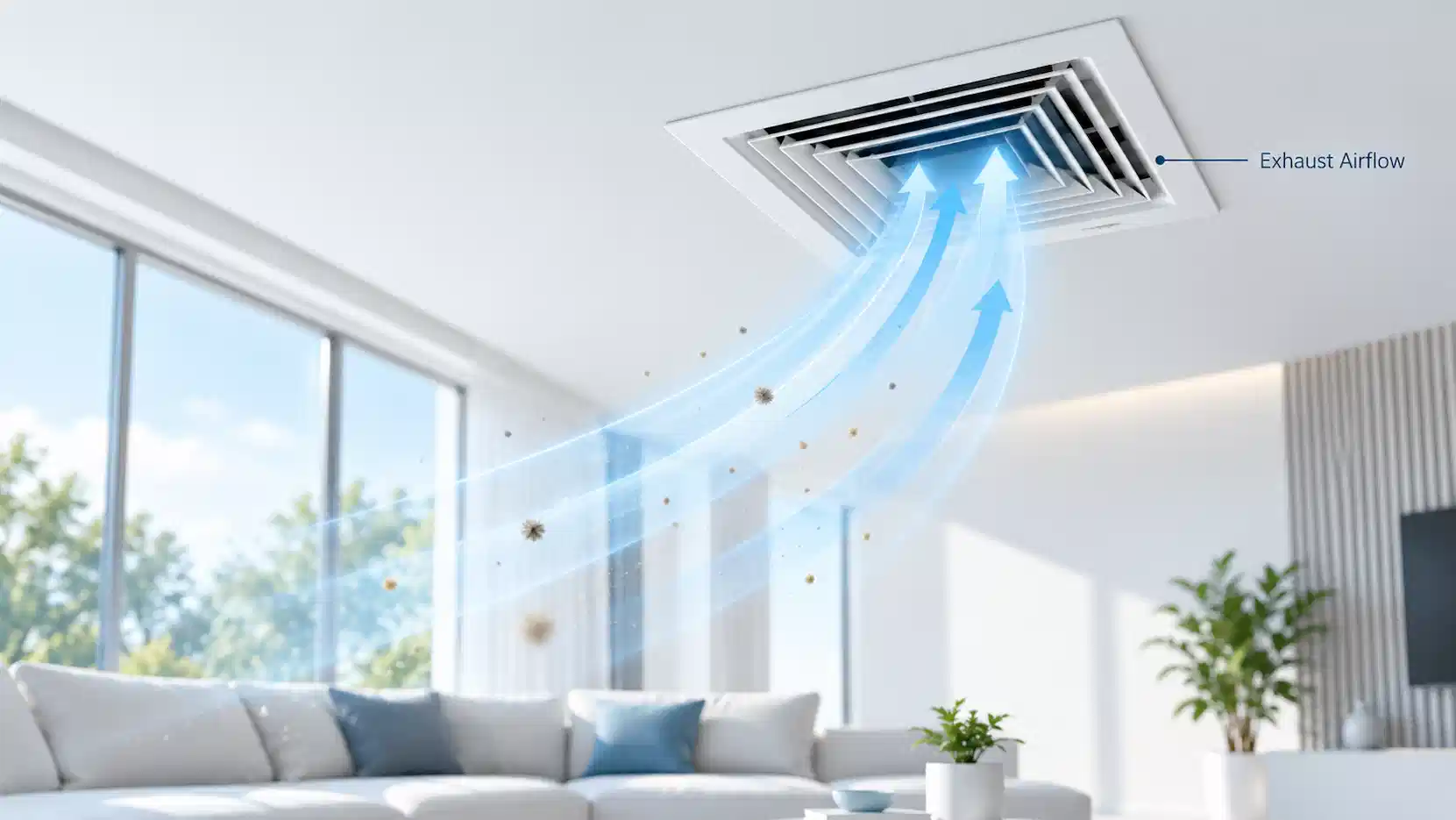
When an exhaust fan stops operating, outdoor air may enter through the duct due to wind or pressure differences. A backdraft damper helps reduce this unwanted reverse airflow.
It can also help limit the movement of outdoor odors, cold air, and other unwanted air through an inactive exhaust duct.
How Does a Backdraft Damper Work?
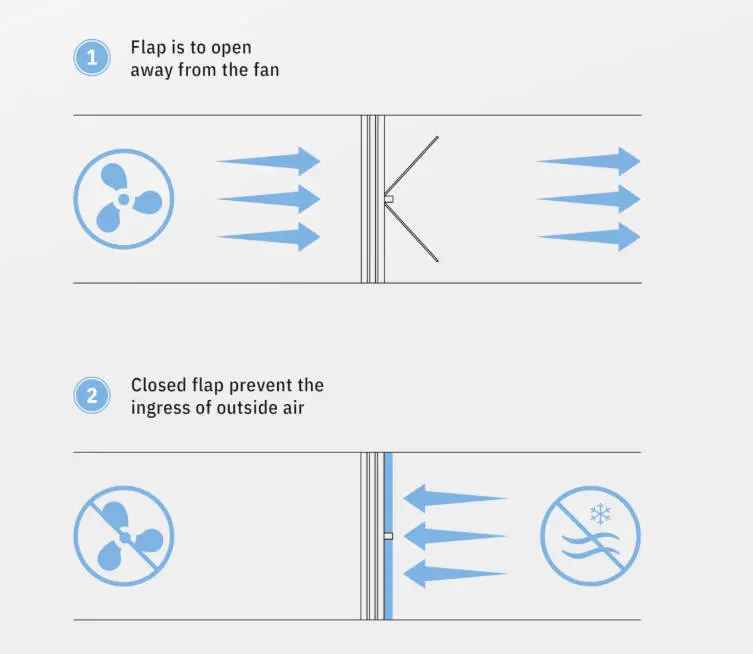
Most backdraft dampers use movable blades or flaps that respond to airflow.
When the fan is running: Air pressure pushes the damper blades open, allowing exhaust air to pass through the duct.
When the fan stops: The blades return toward the closed position through gravity, spring tension, or another closing mechanism.
This simple operation helps control airflow without requiring a separate powered control system in many applications.
However, a standard backdraft damper is not necessarily airtight. Some air leakage may still occur when the blades are closed.
Common Types of Backdraft Dampers
Different damper designs are available for different ventilation requirements.
Gravity Backdraft Dampers
These dampers use gravity to close their blades when airflow stops.
They are commonly used in ventilation applications where the mounting orientation and available airflow pressure are suitable.
Spring-Loaded Backdraft Dampers
Spring-loaded models use spring tension to help close the blades.
They can be useful where a more positive closing force is required, but the fan must generate enough pressure to open them.
Motorized Dampers
Motorized dampers use an actuator to open or close the airflow passage.
They are often used in systems requiring coordinated airflow control or integration with building controls.
Unlike passive backdraft dampers, motorized models require an appropriate electrical supply and control arrangement.
Why Use a Backdraft Damper With an Inline Duct Fan?
An inline duct fan moves air through connected ductwork, but when the fan stops, the duct may still provide a path for unwanted airflow.
A properly selected backdraft damper can help:
- Reduce reverse airflow when the exhaust fan is off.
- Limit cold or warm outdoor air entering through exhaust ducts.
- Reduce unwanted odor transfer through connected ventilation paths.
- Improve airflow control in suitable exhaust applications.
It is important to remember that a backdraft damper does not replace proper ventilation design or building air sealing.
Installation Considerations
Before installing a backdraft damper, check several important factors.
Airflow direction: The damper must be installed according to its intended airflow direction.
Duct size: Select a damper compatible with the duct diameter and connection type.
Pressure resistance: The damper introduces additional resistance, which may affect airflow.
Mounting orientation: Some gravity-operated dampers require a specific orientation to close properly.
Maintenance access: Dust and debris can interfere with blade movement, so periodic inspection is recommended.
For systems designed to reverse airflow direction, a conventional one-way backdraft damper may block the required reverse flow. Such systems need a compatible airflow-control arrangement.
Conclusion
A backdraft damper is a simple but useful component in many ventilation systems.
By restricting unwanted reverse airflow, it can help improve airflow control when an exhaust fan is not operating.
For reliable performance, choose the correct damper type, check its pressure requirements, and follow the manufacturer’s installation instructions.
A properly selected backdraft damper can make a practical difference in the operation of an inline duct ventilation system.