Dust, pollen, and other airborne particles can affect indoor air quality in homes, offices, and commercial buildings.
Many people install ventilation fans to improve airflow, but an important question remains: Can a ventilation fan remove dust and allergens?
The answer depends on the ventilation system and whether it includes suitable air filtration.
1. How Does a Ventilation Fan Affect Indoor Air Quality?
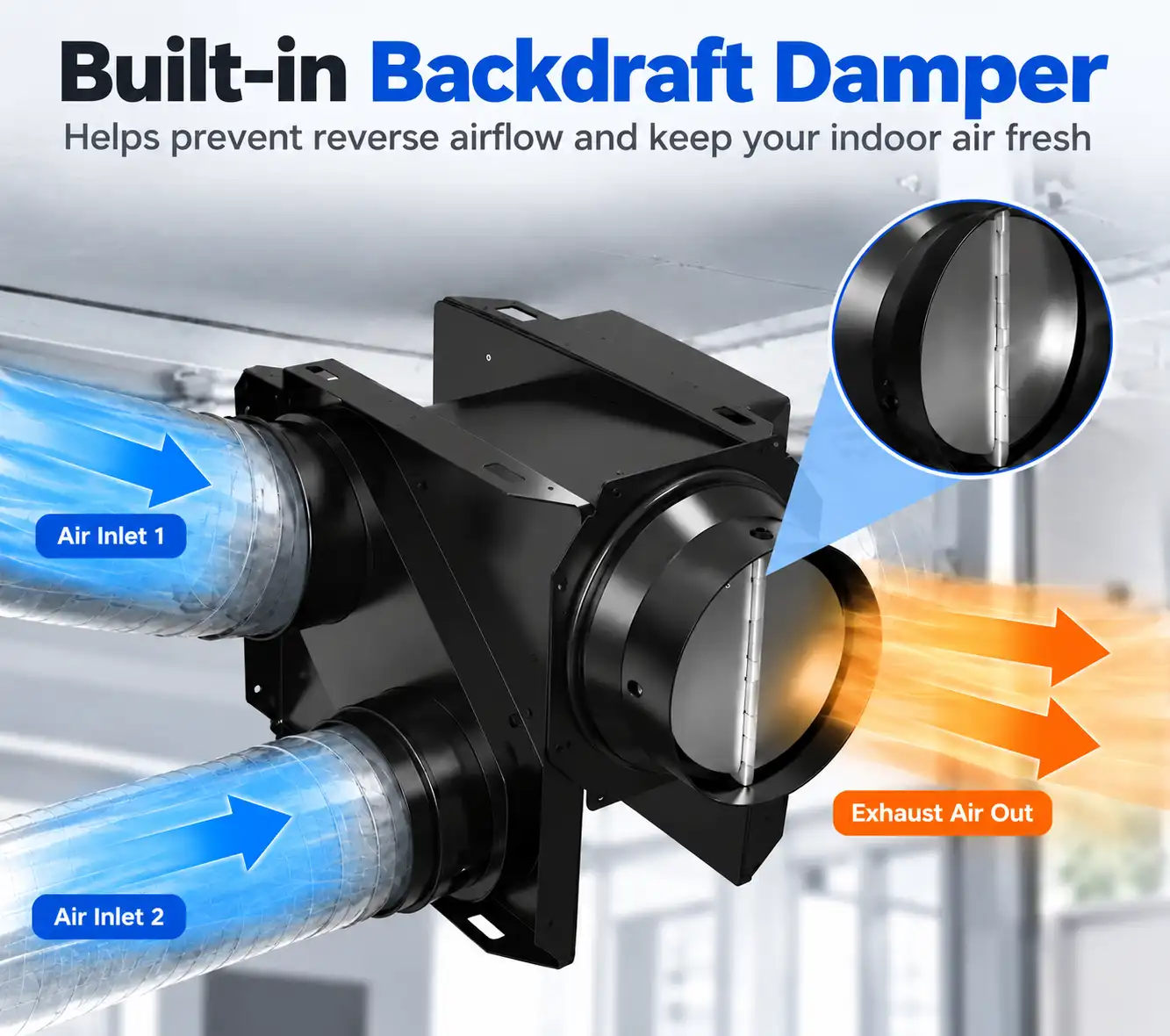
A ventilation fan moves air from one location to another.
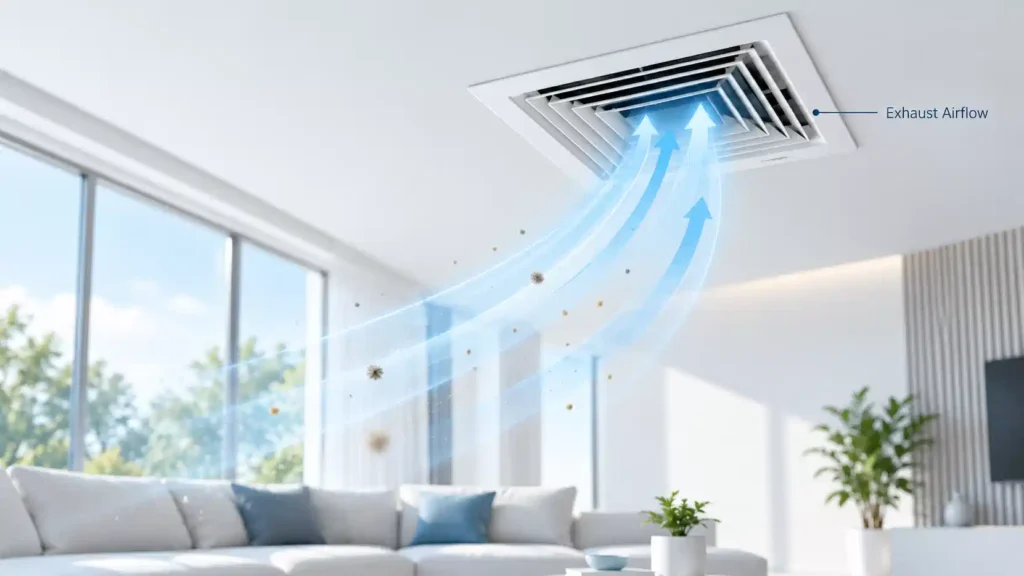
An exhaust fan removes indoor air, while a supply ventilation system introduces outdoor air into a building.
When designed properly, ventilation helps dilute or remove certain indoor-generated pollutants and supports fresh-air exchange.
However, a standard ventilation fan does not automatically capture dust, pollen, or other airborne particles.
Its primary purpose is air movement, not particle filtration.
2. Can Ventilation Reduce Dust and Allergens?
Ventilation can help reduce some airborne contaminants by exhausting polluted indoor air.
For example, a properly designed exhaust system may remove airborne particles generated during certain indoor activities.
However, outdoor air can also contain dust, pollen, and fine particles.
If outdoor air is heavily polluted or contains high pollen concentrations, bringing in more unfiltered outdoor air may increase indoor particle levels.
Therefore, ventilation effectiveness depends on outdoor air quality, airflow design, and the presence of appropriate filtration.
3. Ventilation Fan vs. Air Purifier
Although ventilation fans and air purifiers both affect indoor air quality, they perform different functions.
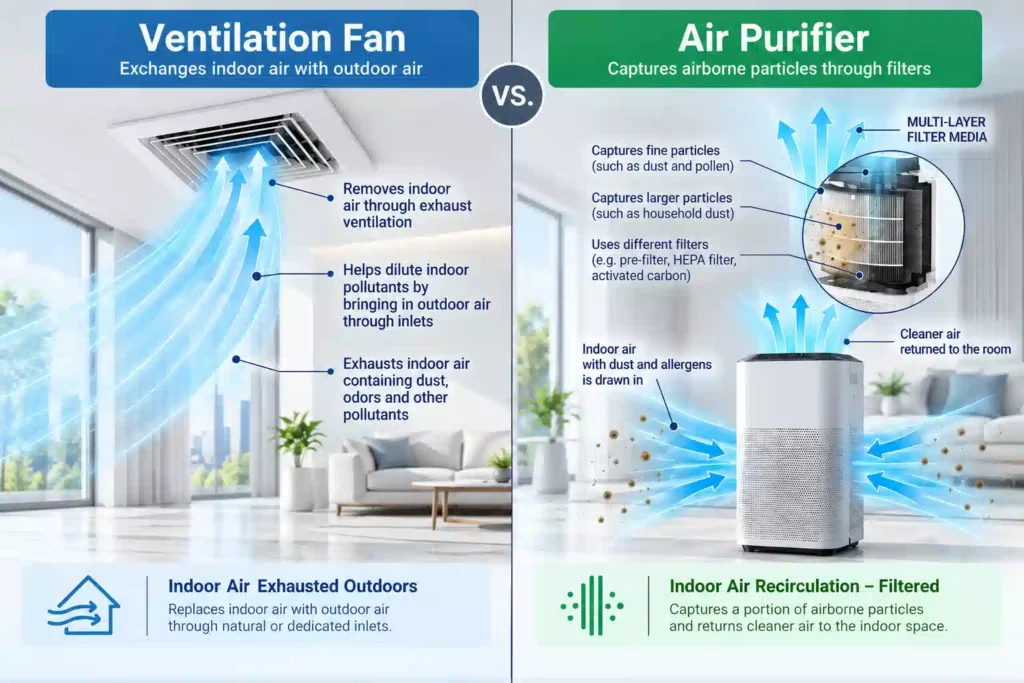
For particle removal, air purifiers equipped with suitable high-efficiency filters can be effective.
However, most portable air purifiers do not provide fresh outdoor air.
This is why ventilation and air filtration are often complementary rather than interchangeable.
4. Should You Add a Filter to an Inline Duct Fan?
Some ventilation systems use filters to reduce dust and other particles entering the building.
However, adding a filter directly to an inline duct fan is not always straightforward.
Filters introduce airflow resistance, which can reduce airflow if the fan is not properly selected for the additional pressure drop.
Before adding a filter, consider:
- Filter compatibility with the ventilation system
- Required airflow and pressure capability
- Appropriate filter efficiency
- Maintenance and replacement access
- Manufacturer recommendations
A ventilation system should be designed to support both the required airflow and the selected filtration equipment.
5. Practical Ways to Improve Indoor Air Quality
A combination of methods is usually more effective than relying on one device.
Control pollution sources. Reduce dust-generating activities and address unnecessary indoor pollutant sources.
Maintain ventilation. Use an appropriately designed ventilation system to provide required outdoor air exchange.
Use suitable filtration. Consider properly sized air cleaners or compatible HVAC filtration systems for airborne particles.
Clean regularly. Remove settled dust using appropriate cleaning methods to reduce its resuspension.
Check outdoor conditions. When outdoor particulate pollution is high, consider limiting unfiltered outdoor air entry while maintaining necessary ventilation through suitable strategies.
These measures work together to create a more effective indoor air quality approach.
Conclusion
A ventilation fan can help remove some airborne pollutants through air exchange, but it does not replace an air filtration system.
For dust and allergen control, the best approach generally combines pollution source reduction, appropriate ventilation, and effective particle filtration.
Understanding the different functions of these systems helps homeowners and building managers make better decisions about indoor air quality.