As energy efficiency becomes an increasingly important consideration in building design, solar-powered ventilation is attracting attention from homeowners, contractors, and facility managers.
A solar roof ventilator uses electricity generated by a solar panel to operate a fan that exhausts air from an attic or roof space. Because it can operate without drawing power from the building’s electrical supply during suitable sunlight conditions, it offers an alternative to conventional powered roof ventilation.
However, solar ventilation is not suitable for every building. Understanding how these systems work, what they can achieve, and where their limitations lie is essential before choosing one.
1. What Is a Solar Roof Ventilator?
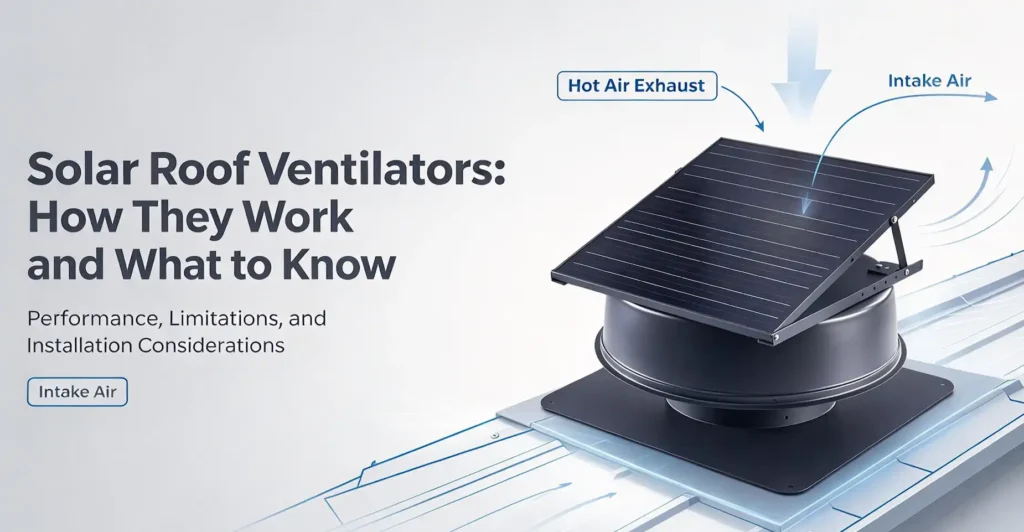
A solar roof ventilator is a roof-mounted ventilation device that uses solar energy to power an exhaust fan.
A typical unit includes a photovoltaic solar panel, an electric motor, a fan assembly, a weather-resistant housing, and a roof mounting structure. Some models use a separate solar panel, while others integrate the panel into the ventilator.
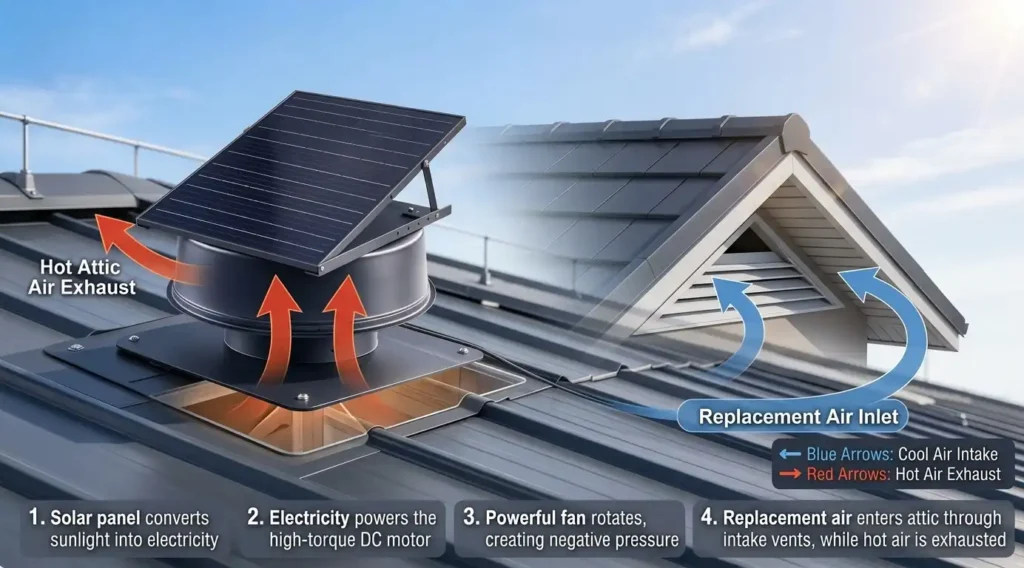
During operation, the solar panel converts sunlight into electrical energy. This electricity powers the motor, which drives the fan and moves air out of the attic or roof space.
Solar roof ventilators are commonly used in residential attics, garages, sheds, and selected commercial or light-industrial applications. The appropriate unit depends on the building layout, ventilation requirements, and available solar exposure.
2. How Does a Solar Roof Ventilator Work?
The operating principle is straightforward.
Step 1: The Solar Panel Generates Electricity
When sunlight reaches the photovoltaic panel, the panel converts solar energy into direct-current electricity.
The available electrical output depends on sunlight intensity, panel orientation, shading, temperature, and the panel’s characteristics.
Step 2: The Motor Drives the Fan
The generated electricity powers the motor, causing the fan to rotate. The fan creates an airflow that removes air from the space beneath the roof.
Many basic solar ventilators operate at variable speeds because their available power changes with sunlight conditions.
Step 3: Hot Air Is Exhausted
During warm weather, an attic can accumulate heat from solar radiation absorbed by the roof. The ventilator removes some of this hot air and discharges it outdoors.
For the system to work effectively, replacement air must enter through suitable intake vents, such as soffit vents or other designed openings.
Step 4: Replacement Air Enters the Attic
As air is exhausted, outdoor air enters through the available intake openings and moves through the attic toward the exhaust fan.
The actual airflow pattern depends on the location and capacity of the intake vents, the fan’s operating point, attic geometry, and air leakage between the attic and the living space.
A solar fan should therefore be considered part of an overall ventilation system rather than a standalone solution.
3. What Are the Benefits of Solar Roof Ventilators?
Reduced Electricity Consumption
A solar-powered unit can operate using electricity generated by its own panel, reducing or eliminating the need for grid electricity while operating under suitable sunlight conditions.
The amount of energy saved depends on the fan’s operating schedule, solar availability, and what equipment it replaces.
Convenient Installation in Suitable Locations
Some solar ventilators can be installed without running a dedicated electrical circuit to the fan. This can simplify installation in certain buildings, although roof penetrations, weatherproofing, structural considerations, and local building requirements still need attention.
Automatic Operation During Sunny Conditions
Many units begin operating when sufficient sunlight is available. This can be useful because solar availability often coincides with periods of strong roof heating.
However, operation is not guaranteed at a constant speed throughout the day, and a basic solar-powered unit may stop when sunlight is insufficient.
Potentially Lower Operating Costs
Because the fan can use solar-generated electricity, ongoing electricity costs may be lower than those of a comparable grid-powered unit.
Actual financial benefits depend on the purchase price, installation costs, maintenance requirements, operating conditions, and the amount of electricity that would otherwise have been consumed.
4. What Are the Limitations?
Solar roof ventilators also have limitations that should be considered before installation.
Performance Depends on Sunlight
Cloud cover, shading, roof orientation, and seasonal changes can affect the power available to the fan. A unit without battery storage or grid backup may provide little or no powered ventilation at night or during periods of insufficient sunlight.
Ventilation Capacity Must Match the Building
A fan that is too small may not provide the required exhaust airflow, while an oversized fan may create excessive negative pressure if intake ventilation is inadequate.
Selection should be based on the space being ventilated, required airflow, available intake area, and the fan’s performance under actual operating conditions.
It Does Not Automatically Solve Indoor Heat Problems
Removing hot air from an attic does not guarantee a large reduction in indoor temperatures or air-conditioning costs.
Roof insulation, air sealing, solar heat gain, attic construction, and the building’s climate all influence how much heat reaches the living space.
Installation Quality Matters
Poorly sealed roof penetrations can allow water to enter the building. Incorrectly positioned intake and exhaust openings may also reduce ventilation effectiveness.
Professional installation can help ensure that the roof remains weather-resistant and that the ventilation system functions as intended.
5. Solar Roof Ventilator vs. Traditional Electric Roof Fan
Both systems use a motor-driven fan to exhaust air, but their power sources and operating characteristics differ.
Solar roof ventilators use electricity generated by a photovoltaic panel. Their output often varies with sunlight, and models without backup power may not operate continuously.
Traditional electric roof fans draw power from the building’s electrical supply. They can provide more predictable operation when correctly selected and controlled, including at night or during cloudy weather.
Solar-powered units may be attractive where grid electricity is difficult to access or where reducing electrical consumption is a priority. Conventional electric fans may be more suitable where consistent airflow is required regardless of sunlight.
The best choice depends on the application, operating schedule, required ventilation rate, and total installation cost.
6. What Should You Consider Before Installation?
Before installing a solar roof ventilator, assess the following factors.
Roof exposure: Check whether the solar panel receives adequate sunlight and whether trees, nearby buildings, or other obstructions create shading.
Intake ventilation: Confirm that sufficient intake openings are available to supply replacement air. Balanced intake and exhaust ventilation helps reduce the risk of drawing conditioned air from the living space.
Attic insulation and air sealing: Make sure the attic floor and ceiling assembly are appropriately insulated and air-sealed. An attic exhaust fan can draw conditioned indoor air into the attic if significant leakage paths exist.
Required airflow: Compare the fan’s rated performance with the ventilation requirements of the space and the resistance of the installed system.
Weather protection: Ensure that the mounting arrangement, flashing, and roof penetrations are suitable for the roof material and local weather conditions.
Local requirements: Check applicable building codes and manufacturer installation instructions before selecting or installing the equipment.
7. Are Solar Roof Ventilators Worth It?
Solar roof ventilators can be a practical option for certain buildings, particularly where the objective is to provide supplemental attic exhaust ventilation during sunny periods without relying on grid electricity.
However, they should not automatically be treated as an energy-saving upgrade for every home.
Building-science guidance from the U.S. Department of Energy’s Building America Solution Center notes that powered attic fans can sometimes draw conditioned air from the living space or create other ventilation problems when the building is not properly designed and sealed. Their benefits therefore depend on the specific building conditions.
Before investing in a solar roof ventilator, assess existing passive ventilation, insulation, air leakage, climate, and the actual need for additional mechanical exhaust.
In some cases, improving insulation, sealing air leaks, and maintaining properly designed passive ventilation may be more effective first steps.
Conclusion
Solar roof ventilators use photovoltaic panels to power exhaust fans, helping remove hot air from attic and roof spaces when sufficient sunlight is available.
They can reduce dependence on grid electricity, but their performance varies with solar conditions and depends on adequate replacement air, suitable fan capacity, and proper installation.
The most effective approach is to evaluate the complete roof ventilation system before choosing equipment. Solar power is a useful option in the right circumstances, but good ventilation design, insulation, and air sealing remain essential to overall building performance.