Have you ever noticed a door becoming difficult to open, air entering through small gaps, or unpleasant odors moving between rooms? These problems may be related to negative air pressure.
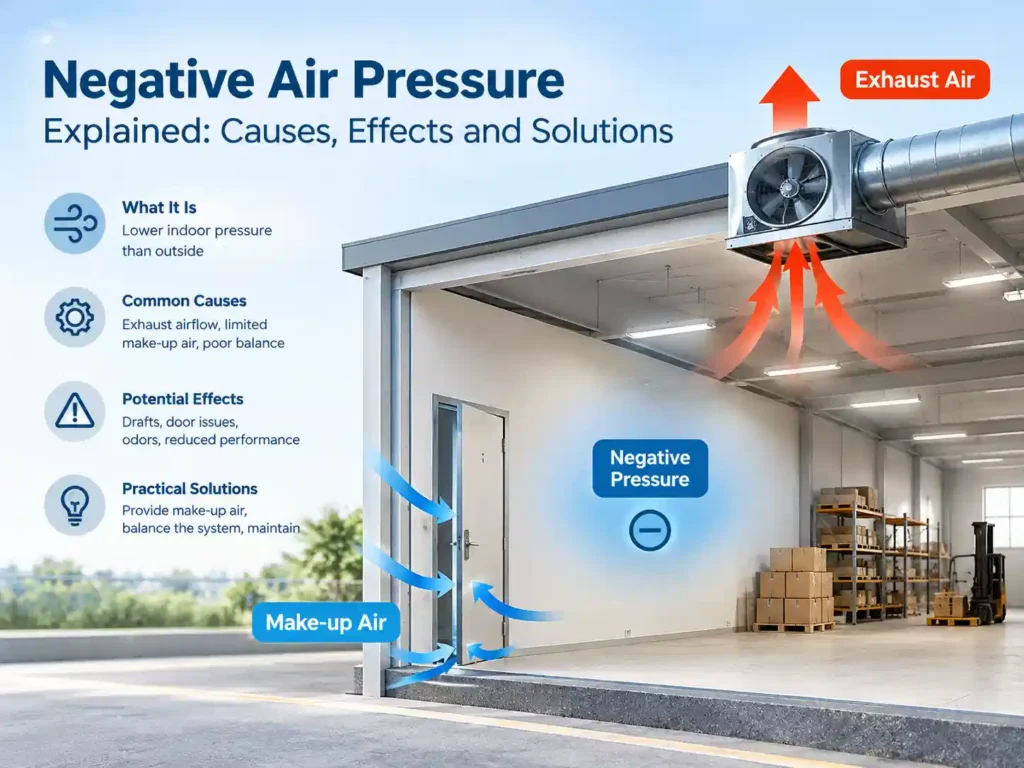
Air pressure plays an important role in how ventilation systems operate. When a room exhausts more air than it receives, the pressure inside can become lower than the pressure outside. This condition is known as negative air pressure.
Understanding how negative air pressure works can help homeowners, facility managers, and building operators improve indoor air movement and ventilation performance.
1. What Is Negative Air Pressure?
Negative air pressure occurs when the air pressure inside a space is lower than the pressure in the surrounding area.
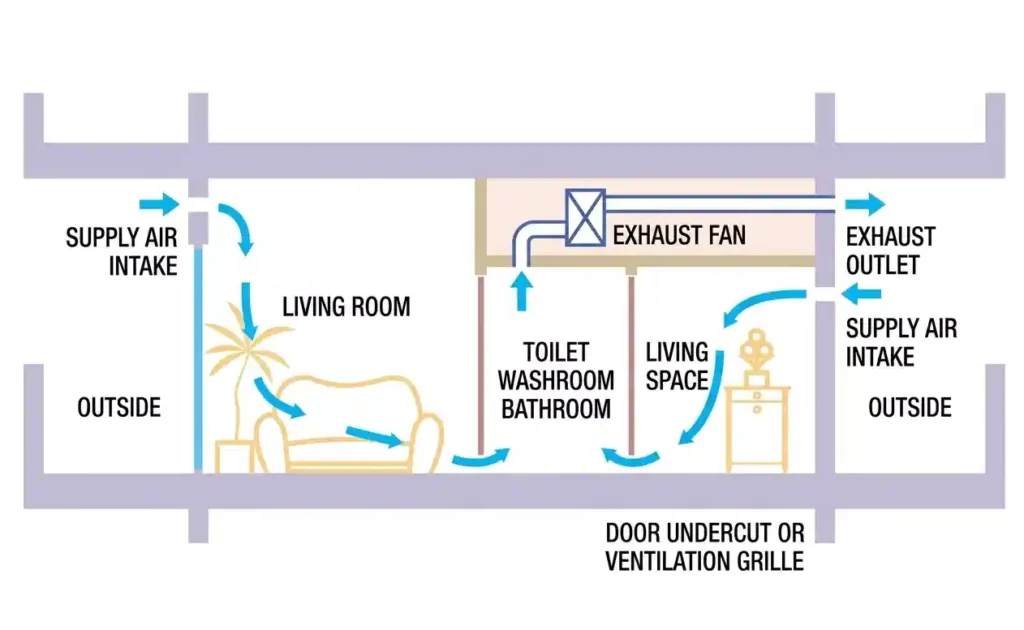
In a building, this often happens when exhaust fans remove indoor air faster than replacement air can enter. As air leaves the room, outside air is drawn through available openings, such as door gaps, window seals, vents, and other leakage points.
Negative pressure is not always a problem. It is intentionally used in certain environments, including isolation rooms and some industrial spaces, to help control the movement of airborne contaminants.
However, excessive or unintended negative pressure can create ventilation problems when a building does not have an adequate supply of replacement air.
2. What Causes Negative Air Pressure?
Several factors can contribute to negative air pressure in residential, commercial, and industrial buildings.
Excessive Exhaust Airflow
Exhaust fans remove air from a space. If the total exhaust airflow is greater than the available supply air, indoor pressure may decrease.
This can occur when multiple exhaust fans operate simultaneously, particularly in buildings with limited outdoor air openings.
Insufficient Make-Up Air
Make-up air is replacement air introduced into a building to compensate for the air being exhausted.
Without sufficient make-up air, the ventilation system must draw replacement air through unintended openings. This can increase drafts and make doors harder to operate.
Poorly Balanced Ventilation Systems
A building may have several supply and exhaust systems serving different rooms or zones. If these systems are not properly balanced, some areas may develop unintended pressure differences.
Changes to fan settings, building layouts, or operating schedules can also affect the overall balance.
Air-Tight Building Construction
Modern buildings often use improved sealing and insulation to reduce energy loss. Although this can improve energy efficiency, it may also limit the amount of air entering naturally.
Mechanical ventilation systems in relatively airtight buildings therefore need appropriate provisions for outdoor and make-up air.
3. How Does Negative Air Pressure Affect a Building?
The effects depend on the pressure difference, building design, and the equipment operating inside the space.
Increased drafts: Air may enter through gaps around doors, windows, and wall penetrations, creating uncomfortable air movement.
Door operation problems: Pressure differences can increase the force required to open or close certain doors.
Unwanted odor transfer: Air may be drawn from adjacent rooms, corridors, or other areas, potentially carrying odors with it.
Reduced ventilation performance: Insufficient replacement air can increase system resistance and reduce the actual airflow delivered by an exhaust fan.
Potential combustion safety concerns: In buildings with naturally drafted fuel-burning appliances, excessive negative pressure may interfere with proper exhaust venting and contribute to carbon monoxide entering occupied spaces.
If combustion appliances are present, pressure-related problems should be assessed by a qualified professional. Carbon monoxide alarms and proper appliance maintenance are essential safety measures.
4. What Is the Difference Between Negative and Positive Air Pressure?
Negative and positive air pressure describe the direction of the pressure difference between a room and its surroundings.
Negative Air Pressure
When indoor pressure is lower than the surrounding pressure, air tends to move into the room through available openings.
This approach can help contain odors or contaminants within a designated space when the ventilation system is properly designed.
Positive Air Pressure
When indoor pressure is higher than the surrounding pressure, air tends to move outward through available openings.
Positive pressure may help limit the entry of unfiltered air from adjacent spaces, depending on the building’s filtration and ventilation design.
Neither condition is universally better. The appropriate pressure relationship depends on the purpose of the room, contaminant-control requirements, building design, and applicable standards.
5. How Can You Reduce Unwanted Negative Air Pressure?
If negative air pressure is causing problems, the solution is usually to improve the balance between exhaust airflow and incoming air.
Provide Adequate Make-Up Air
Ensure that sufficient replacement air can enter the building through designed air inlets, dedicated outdoor air systems, or other suitable provisions.
Simply opening a door or window may provide temporary relief, but it is not always an appropriate long-term solution.
Balance Supply and Exhaust Airflow
Have the ventilation system checked to determine whether supply and exhaust airflow are appropriate for the intended application.
In some buildings, adjusting fan operation or providing additional supply air can reduce excessive pressure differences.
However, do not change airflow settings without considering indoor air quality, contaminant control, and the ventilation requirements of each area.
Check Filters, Ducts, and Air Openings
Blocked filters, dirty grilles, obstructed outdoor air intakes, and restrictive ductwork can limit airflow.
Inspect these components regularly and clean or replace them as recommended by the equipment manufacturer.
Choose Fans Based on System Requirements
An exhaust fan should be selected according to the required airflow and the resistance of the connected ductwork and accessories.
A fan’s advertised free-airflow rating does not necessarily represent the airflow it will deliver in an installed system.
Proper selection and installation help ensure that the ventilation system performs as intended.
6. Is Negative Air Pressure Always Bad?
No. Negative air pressure is a useful ventilation strategy when applied correctly.
For example, certain healthcare rooms, laboratories, and industrial work areas use controlled negative pressure to help prevent contaminated air from moving into adjacent spaces.
In these applications, the pressure relationship must be supported by an appropriately designed ventilation system, verified airflow patterns, and suitable monitoring or maintenance procedures.
Problems arise when negative pressure is unintended, excessive, or not supported by sufficient replacement air.
The goal is not necessarily to eliminate negative pressure, but to maintain the pressure relationship required for the building’s intended use.
Conclusion
Negative air pressure occurs when the pressure inside a space falls below the pressure in its surroundings. It commonly develops when exhaust airflow exceeds the available replacement air.
Although controlled negative pressure is valuable in certain applications, an imbalance can contribute to drafts, door operation problems, unwanted odor transfer, and ventilation performance issues.
By providing adequate make-up air, balancing supply and exhaust systems, and selecting fans according to actual operating requirements, building operators can improve ventilation performance and maintain the intended pressure relationship.