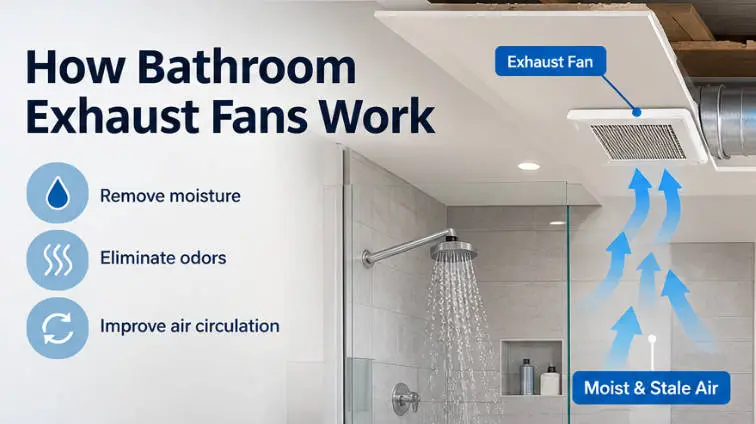
A ventilation system should remove stale air and maintain comfortable indoor conditions without creating excessive noise. However, humming, rattling, whistling, and vibration can become common problems in residential, commercial, and industrial environments.
The good news is that a noisy ventilation system does not always require a new fan. The source may be a loose mounting bracket, restricted airflow, poorly supported ductwork, or an unsuitable fan for the application.
Understanding the cause is the first step toward reducing ventilation system noise while maintaining reliable airflow.
1. Identify the Type of Ventilation Noise
Different sounds often indicate different problems. Before replacing components, observe when the noise occurs and where it is loudest.
Humming or buzzing: This may come from the motor, electrical components, or vibration transmitted through the mounting structure.
Rattling or knocking: Loose screws, fan guards, mounting brackets, or duct connections can produce intermittent mechanical noise.
Whistling or hissing: These sounds may indicate air passing through narrow openings, restrictive grilles, partially closed dampers, or poorly sealed connections.
Loud rushing air: Excessive air velocity, abrupt duct transitions, or restrictive fittings may create turbulence and noticeable airflow noise.
Grinding or scraping: These sounds can indicate worn bearings, an obstructed impeller, or another mechanical fault. Turn off the equipment and arrange an inspection before continuing operation.
Correctly identifying the noise helps avoid spending money on the wrong solution.
2. Check Fan Installation and Mounting
Improper installation is a common reason ventilation equipment becomes noisy.
When a fan is mounted on an unstable surface, vibration can transfer into walls, ceilings, ductwork, and nearby structures. This may amplify sound even when the fan itself is operating normally.
To address the problem:
- Tighten loose mounting screws and brackets.
- Check that the fan is securely supported.
- Inspect mounting surfaces for looseness or resonance.
- Use suitable vibration-isolation mounts where the equipment design permits.
- Ensure that connected ductwork does not place excessive mechanical stress on the fan.
Flexible connectors and vibration-isolation components may help reduce structure-borne noise when correctly selected and installed.
Always follow the manufacturer’s installation instructions and ensure that mounting changes do not compromise equipment safety.
3. Reduce Airflow Restrictions and Turbulence
Airflow noise can increase when air encounters unnecessary resistance.
Common causes include undersized ducts, clogged filters, dirty grilles, partially closed dampers, and excessive bends. These restrictions may force air through smaller openings or create turbulent flow.
Start by inspecting accessible filters, grilles, dampers, and duct connections. Clean or replace components when necessary and confirm that dampers are in their intended operating positions.
Duct layout also matters. Sharp turns, abrupt diameter changes, and poorly designed transitions can disturb airflow and increase pressure losses.
Where practical, use appropriately sized ductwork, smoother transitions, and a layout with fewer unnecessary bends.
However, simply reducing fan speed is not always the right solution. The system must still deliver enough airflow for its intended purpose. Any adjustment should be checked against the required ventilation rate and the fan’s operating characteristics.
4. Inspect Ductwork for Vibration and Resonance
Ductwork can amplify noise generated elsewhere in a ventilation system.
Long unsupported duct sections may vibrate during operation. Thin duct walls can also resonate at particular frequencies, creating a humming or drumming sound.
Inspect the duct system for loose supports, rattling joints, and contact with walls or ceilings. Add appropriate supports where needed and correct any loose connections.
In some installations, acoustic insulation or a properly selected duct silencer can help reduce transmitted noise. The choice depends on the noise frequency, available space, airflow requirements, and system pressure losses.
Avoid adding materials that obstruct the duct or are unsuitable for the operating environment. Acoustic improvements should not introduce excessive airflow resistance or create maintenance problems.
5. Choose the Right Exhaust Fan for the Application
Fan selection has a direct impact on noise, airflow, and overall system performance.
A fan that is too small may struggle to deliver the required airflow against system resistance. Conversely, an unnecessarily large fan may move more air than needed and create avoidable noise if operated under unsuitable conditions.
When evaluating an exhaust fan, consider:
- Required airflow: Determine the ventilation demand of the room or process.
- Static pressure: Account for resistance from ducts, filters, grilles, dampers, and other components.
- Operating speed: Check whether the fan can meet the required duty point without excessive operating speed.
- Noise specifications: Compare manufacturer-provided sound data under relevant test conditions.
- Installation environment: Consider available mounting space, surrounding structures, and maintenance access.
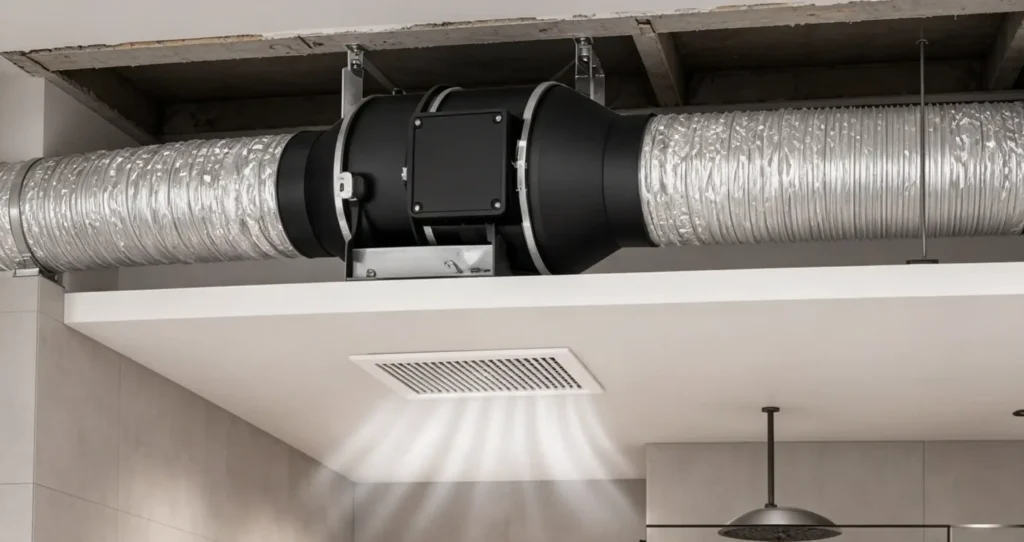
An inline duct fan may be appropriate for systems where the fan is installed within the ductwork, while other exhaust fan designs may better suit wall, ceiling, or industrial applications.
Do not compare noise ratings without checking their measurement conditions. Sound pressure levels measured at different distances or in different environments may not be directly comparable.
6. Consider Motor Control and Fan Maintenance
Operating a fan at a suitable speed can help manage noise when the equipment supports the required control method.
For example, a compatible variable-speed fan may allow airflow to be adjusted to actual demand rather than operating continuously at maximum output. However, speed changes must remain within the manufacturer’s permitted operating range.
Regular maintenance is equally important. Dust accumulation on an impeller can cause imbalance, while worn bearings or damaged components may produce increasing mechanical noise.
A practical maintenance routine includes:
- Inspecting and cleaning accessible fan components.
- Checking for loose fasteners and damaged fan blades.
- Examining bearings and moving parts according to manufacturer guidance.
- Confirming that electrical connections and control settings are appropriate.
- Recording changes in noise or vibration over time.
Disconnect power before inspection or cleaning, and have qualified personnel handle electrical work or repairs involving internal components.
7. When Should You Replace a Noisy Ventilation Fan?
Not every noisy fan needs replacement. Loose connections, dirty components, and poorly supported ductwork can often be corrected without changing the equipment.
Replacement may be worth considering when the motor or bearings are significantly worn, the fan is damaged, required airflow cannot be maintained, or the existing unit is unsuitable for the system’s pressure requirements.
Before choosing a replacement, assess the complete ventilation system rather than comparing fans by airflow alone. A suitable replacement should meet the required airflow and static pressure while providing acceptable noise performance under the intended operating conditions.
For commercial and industrial applications, also consider installation requirements, maintenance access, and the operating environment.
Conclusion
Reducing ventilation system noise starts with identifying its source. Fan vibration, airflow restrictions, duct resonance, and unsuitable equipment selection can all contribute to excessive sound.
Begin with basic inspections, correct installation problems, improve ductwork where necessary, and verify that the fan is operating at an appropriate duty point. If noise persists, compare replacement options using reliable airflow, static pressure, and sound data.
A properly selected and installed ventilation system can help maintain effective air movement while creating a more comfortable and productive indoor environment.