A bathroom exhaust fan may look simple, but it plays an important role in removing moisture, odors, and stale air from the room.
Without proper ventilation, excess humidity can remain in the bathroom and contribute to condensation, unpleasant odors, and moisture-related problems.
So, how does a bathroom exhaust fan actually work?
How Does a Bathroom Exhaust Fan Work?
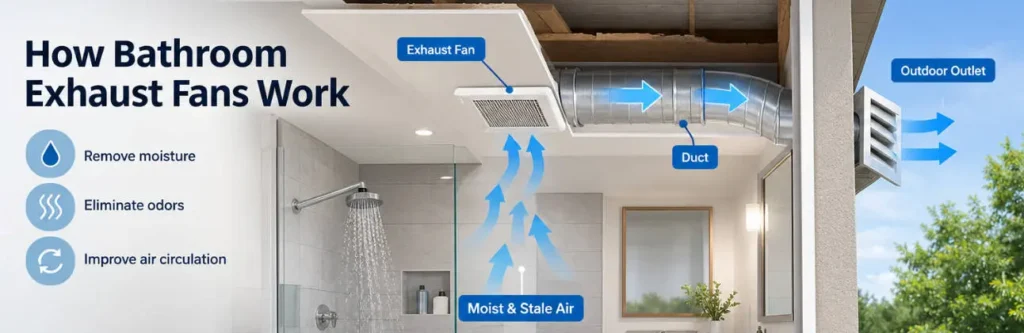
A bathroom exhaust fan works by pulling air from the bathroom and exhausting it to another location, usually outside the building.
The basic airflow path is:
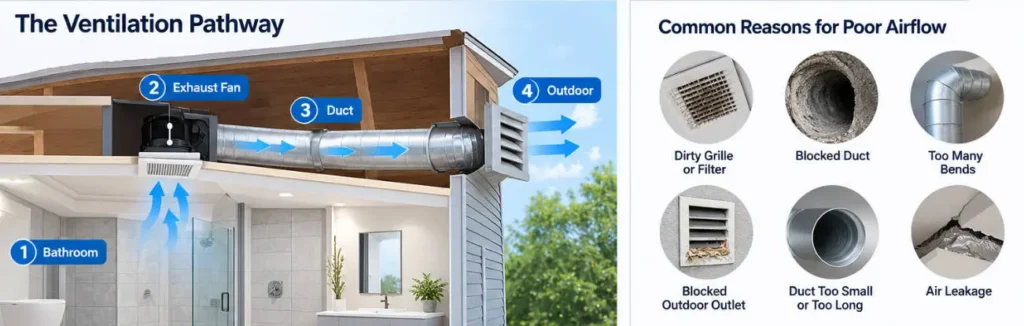
Bathroom Air → Exhaust Fan → Duct → Outdoor Outlet
When the fan is switched on, the motor rotates the fan blade or impeller. This creates a pressure difference that draws air from the bathroom into the fan.
The air then travels through the exhaust duct and is discharged outside.
At the same time, replacement air enters the bathroom through the gap under the door, a ventilation opening, or another air inlet.
This continuous air movement helps remove humid and stale air.
What Does a Bathroom Exhaust Fan Remove?
A bathroom exhaust fan is mainly used to remove unwanted air from the room.
1. Moisture
Hot showers and baths produce a large amount of water vapor.
If humid air remains in the bathroom for too long, condensation can form on walls, ceilings, mirrors, and other surfaces.
Exhaust ventilation helps remove this moisture before it accumulates.
2. Odors
Bathroom odors can quickly affect indoor air quality.
An exhaust fan provides a simple way to remove unwanted odors and replace stale air with fresher air.
3. Stale Air
A bathroom with insufficient ventilation can feel humid and stuffy.
Regular air extraction helps maintain better air circulation and a more comfortable environment.
Why Does the Fan Need a Duct?
A bathroom exhaust fan should normally discharge the extracted air to an appropriate outdoor location rather than simply moving the air into the ceiling or another enclosed space.
The duct provides a controlled path for the exhausted air.
However, the duct itself creates resistance.
A long duct, small duct diameter, multiple bends, or a restrictive outlet can reduce airflow.
This is why the fan and duct system should be considered together.
Where Should a Bathroom Exhaust Fan Be Installed?
The fan should generally be positioned where it can effectively collect humid or stale air.
For bathrooms with showers or bathtubs, placing the exhaust point relatively close to the moisture source can help remove humid air more effectively.
However, the fan should also be installed according to the manufacturer’s requirements and applicable electrical and building regulations.
The duct route should be kept as short and direct as practical.
Why Is My Bathroom Exhaust Fan Not Removing Enough Air?
If a bathroom fan seems weak, the problem may not necessarily be the motor.
Check the following:
Dirty grille or filter
Dust and dirt can restrict airflow.
Blocked duct
A blocked or damaged duct can significantly reduce exhaust performance.
Too many bends
Multiple bends increase resistance in the duct system.
Duct is too long or too small
Higher resistance can reduce the actual airflow.
Outdoor outlet is blocked
A blocked louver or exhaust outlet can restrict air discharge.
Insufficient replacement air
If the bathroom is almost completely sealed, the fan may have difficulty drawing enough replacement air into the room.
How Long Should a Bathroom Exhaust Fan Run?
The required operating time depends on the bathroom, fan capacity, humidity level, and ventilation system.
In general, the fan should continue running long enough to remove humid air after showering rather than being switched off immediately.
A timer or humidity-based control can also be useful in applications where automatic operation is preferred.
How to Improve Bathroom Exhaust Performance
Good ventilation depends on more than choosing a fan with a high airflow rating.
For better performance:
- Select a suitable fan capacity
- Use an appropriate duct size
- Keep the duct route short where possible
- Reduce unnecessary bends
- Keep the exhaust grille clean
- Make sure the outdoor outlet is not blocked
- Provide a suitable path for replacement air
The goal is to create a complete and relatively low-resistance airflow path from the bathroom to the outside.
Bathroom Exhaust Fan vs. General Ventilation Fan
Bathroom exhaust fans are designed specifically for extracting air from smaller enclosed spaces.
General ventilation fans may be used in larger rooms, workshops, warehouses, or other areas where different airflow requirements apply.
The right fan depends on the room size, required airflow, installation position, duct resistance, and operating conditions.
Conclusion
A bathroom exhaust fan works by continuously moving humid, stale, and odorous air out of the room through an exhaust duct.
The fan itself is only one part of the ventilation system. Duct size, duct length, bends, outdoor outlets, and replacement air can all affect the final performance.
A properly selected and installed exhaust fan can help maintain a more comfortable and better-ventilated bathroom.