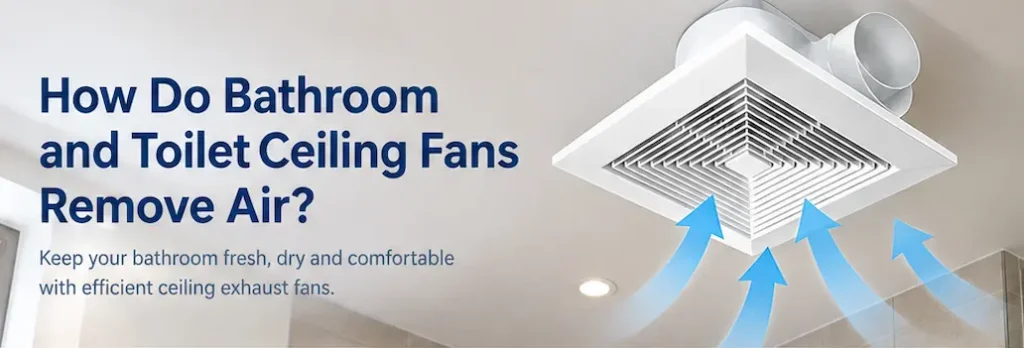
Bathroom and toilet areas often have high humidity, unpleasant odors, and poor air circulation. A ceiling exhaust fan provides a simple way to remove stale air and improve ventilation.
But how does a bathroom ceiling exhaust fan actually work?
How Does a Bathroom Ceiling Exhaust Fan Work?
A ceiling exhaust fan is usually installed above the ceiling and connected to a ventilation duct.
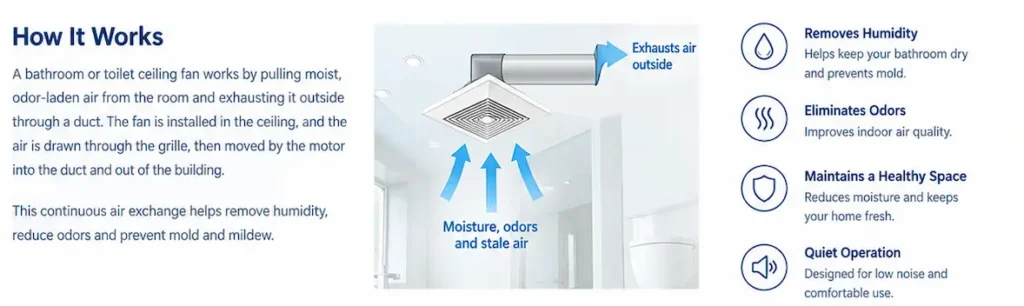
When the fan is running, it pulls air from the bathroom through the ceiling grille. The air is then moved through the duct and discharged outside the building.
The basic airflow process is:
Bathroom air → Ceiling fan → Ventilation duct → Outside
The fan continuously removes air containing moisture, odors, and other pollutants, while fresh air enters the room through gaps under the door, windows, or other ventilation openings.
This creates air exchange and helps keep the bathroom more comfortable.
Why Is Bathroom Exhaust Ventilation Important?
Bathrooms produce a significant amount of moisture during showers and other activities. Without proper ventilation, humid air can remain in the room for a long time.
A ceiling exhaust fan can help with several common problems:
1. Remove Humid Air
The fan removes moisture-laden air from the bathroom and exhausts it outside. This helps reduce excessive humidity.
2. Reduce Unpleasant Odors
Exhaust ventilation helps remove odors from toilets and bathrooms instead of allowing them to remain inside the room.
3. Reduce Moisture-Related Problems
Regular ventilation can help reduce the accumulation of moisture on ceilings, walls, and other surfaces.
4. Improve Indoor Air Quality
By continuously replacing stale air with fresh air, an exhaust fan can create a more comfortable indoor environment.
How Is a Ceiling Exhaust Fan Installed?
A typical ceiling exhaust fan system consists of several basic components:
- Ceiling exhaust fan
- Ceiling grille
- Ventilation duct
- External exhaust outlet
The fan is mounted in or above the ceiling, while the duct connects the fan to an outside exhaust point.
For effective ventilation, the exhaust air should be discharged outside rather than simply moved into the ceiling space.
The duct should also be installed as efficiently as possible. Excessive duct length, sharp bends, or restrictions can increase airflow resistance and affect the actual ventilation performance.
How Do You Choose the Right Ceiling Exhaust Fan?
Choosing a bathroom exhaust fan is not only about the physical size of the fan. Airflow, room size, duct configuration, noise, and installation conditions should also be considered.
Airflow
Airflow is one of the most important specifications.
For example, our GD6 ceiling exhaust fan provides an airflow of 180 m³/h, while the GD9 provides 250 m³/h.
A higher airflow does not automatically mean a better choice. The fan should be selected according to the room and ventilation requirements.
Room Size
Our ceiling exhaust fan range includes 6, 9, 10, and 12 inch sizes to meet different bathroom and toilet ventilation requirements.
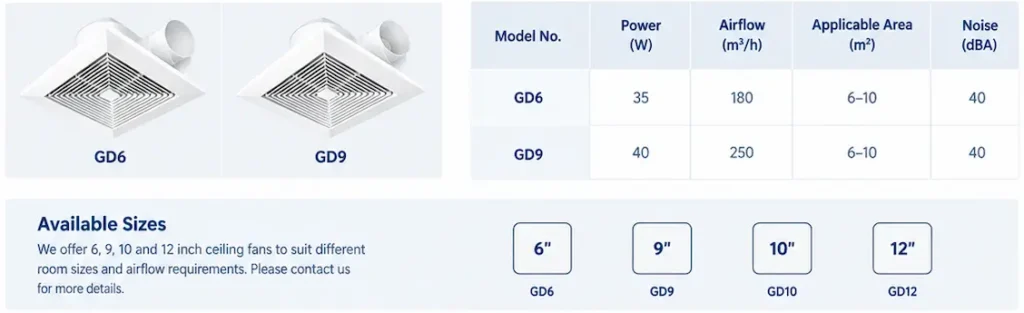
For the 10-inch and 12-inch models, specifications can be selected according to the required airflow and application.
What Can Affect Actual Exhaust Performance?
The rated airflow of a fan is normally measured under specific test conditions. Actual airflow in a bathroom can be affected by the ventilation system.
Common factors include:
- Duct length
- Number of duct bends
- Duct diameter
- Exhaust outlet resistance
- Dirty filters or grilles
- Incorrect installation
For this reason, a fan with a suitable airflow rating should be matched with a properly designed duct system.
Ceiling Exhaust Fan vs. Simply Opening a Window
Opening a window can provide natural ventilation, but it depends heavily on weather conditions, building layout, and outdoor airflow.
A ceiling exhaust fan provides mechanical ventilation and can actively remove air from the room.
This makes ceiling exhaust fans particularly useful for bathrooms and toilets where controlled exhaust ventilation is required.
Conclusion
A bathroom or toilet ceiling exhaust fan works by pulling stale, humid, and odorous air from the room and exhausting it outside through a duct.
For good ventilation performance, it is important to consider airflow, room size, fan size, duct design, and installation conditions together.
Our ceiling exhaust fan range is available in 6, 9, 10, and 12 inch sizes, providing options for different bathroom and toilet ventilation applications.
If you are looking for a ceiling exhaust fan for residential, commercial, or OEM applications, contact us to discuss your required airflow, size, and specifications.