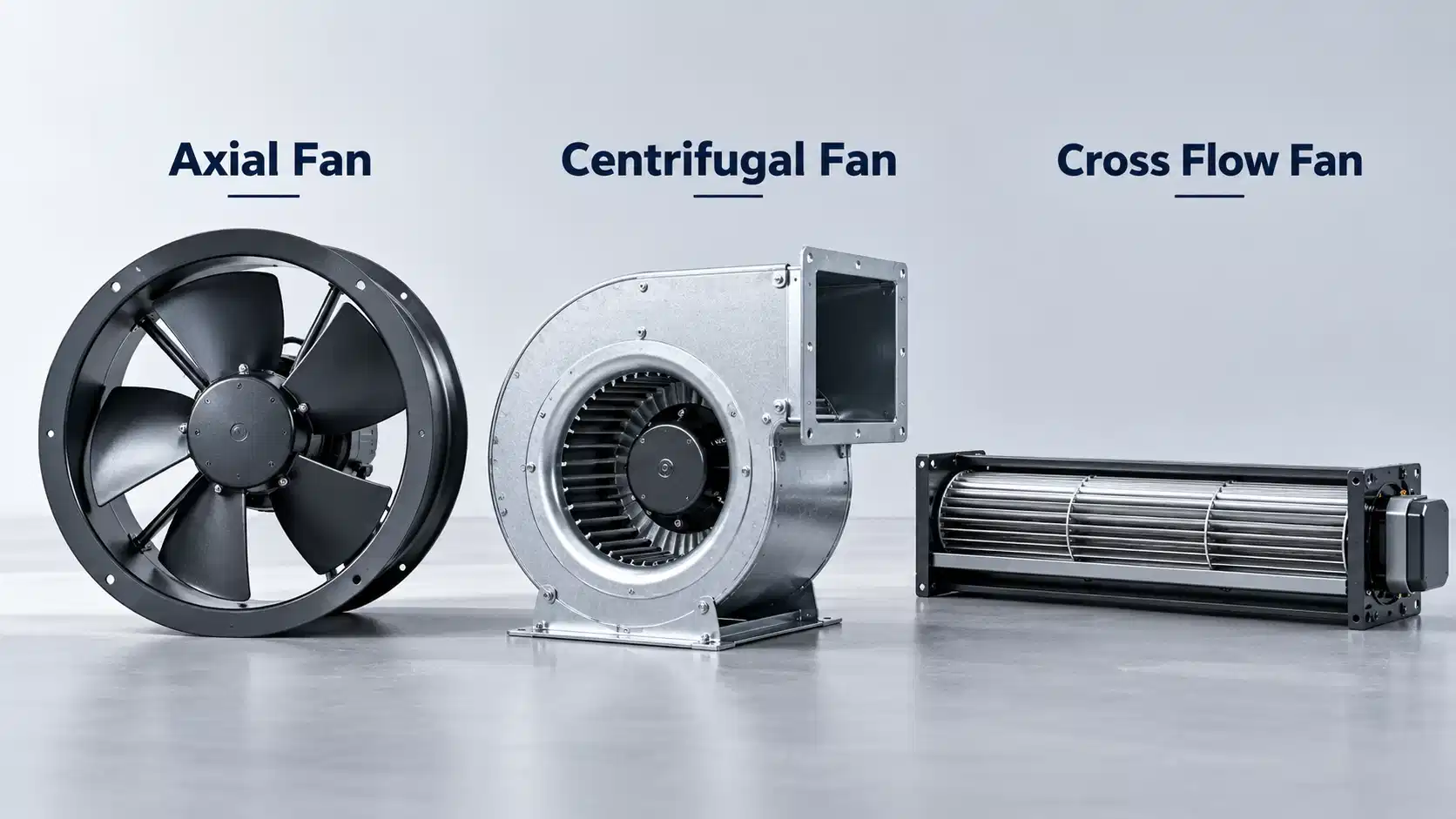
Why Fan Speed Control Matters
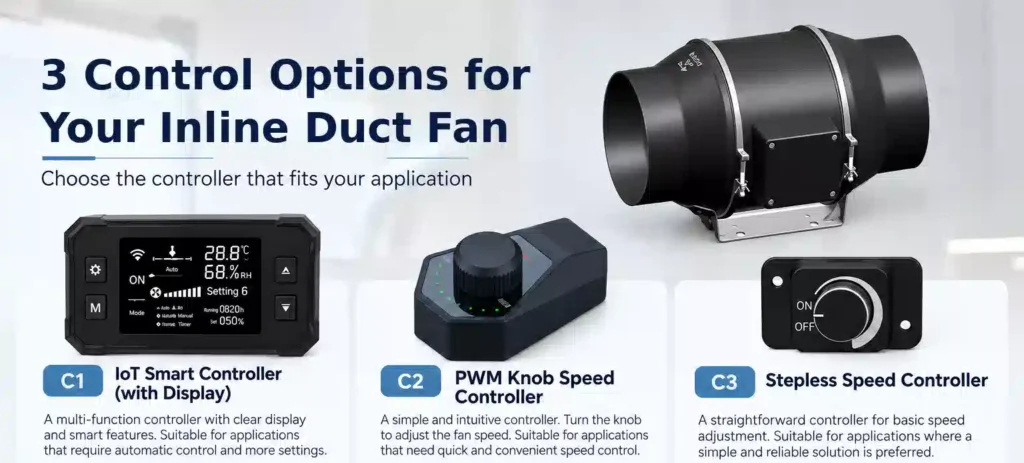
An inline duct fan does not always need to run at its maximum speed.
A bathroom may require additional ventilation after a shower, while a storage room may need a different level of airflow during normal operation.
Adjustable fan speed gives users more control over how the ventilation system operates.
For compatible EC inline duct fans, an appropriate controller can regulate motor speed without replacing the fan itself.
At TTTIGER, three controller options are available for compatible inline duct fan configurations: the C1 smart controller, C2 PWM knob controller, and C3 stepless speed controller.
Each provides a different way to interact with the ventilation system.
C1: IoT Smart Controller With Display
The C1 is designed for users who prefer a digital control interface.
Its integrated display and button-based layout offer an alternative to traditional rotary controls.
A screen-based controller can be particularly convenient in installations where users want a more visual way to manage fan operation.
Best suited for: Customers who prefer a digital interface and a more structured control experience.
The exact display information, connected functions, and available operating modes should be confirmed from the controller’s specification sheet.
C2: PWM Knob Speed Controller
The C2 offers a more direct approach.
Instead of navigating a screen-based interface, users adjust the fan through a physical rotary knob.
The controller is identified as a PWM model, meaning its speed-control function uses a pulse-width modulation signal compatible with the relevant fan control input.
This makes it a practical option for users who want straightforward manual speed adjustment.
Best suited for: Everyday ventilation applications where convenient, hands-on speed control is preferred.
C3: Stepless Speed Controller
The C3 provides another simple rotary control option.
Its stepless adjustment design allows users to select settings within the controller’s supported operating range rather than choosing only between a few fixed speed positions.
The compact panel-style design is useful where a straightforward control interface is preferred.
Best suited for: Ventilation installations requiring simple, continuous manual adjustment.
Although the C2 and C3 both use rotary controls, they should not be assumed to have identical electrical interfaces or adjustment characteristics.
Comparing the Three Controllers
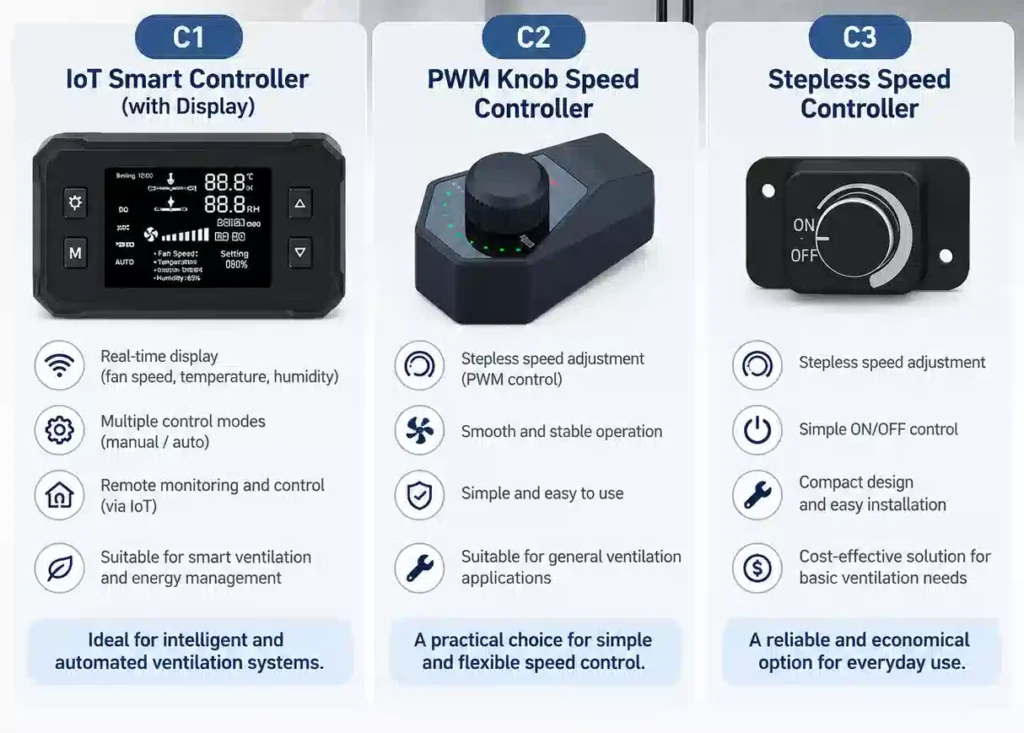
All three offer a way to manage compatible inline duct fans, but the best choice depends on the model and the user’s preferred operating method.
Does Reducing Fan Speed Always Save Energy?
Reducing fan speed can lower power consumption in many compatible systems. However, the actual savings depend on the fan motor, controller, and operating conditions.
Slower operation also changes the airflow delivered through the ductwork.
A lower speed setting may be sufficient for some applications, but it should not reduce ventilation below the level required for the room.
Noise may also change with fan speed, although the final sound level depends on the fan, ductwork, mounting, and airflow conditions.
What Should You Check Before Choosing a Controller?
Before selecting a controller, confirm that it is supported by the exact inline fan model.
Pay particular attention to the control signal, connector type, electrical requirements, and available adjustment range.
A PWM controller, for example, should not be connected to a fan solely because both products are described as variable-speed equipment.
The fan and controller must use compatible control interfaces.
Choose the Control Style That Fits Your Needs
The C1, C2, and C3 offer different approaches to inline duct fan speed control.
The C1 provides a display-based interface, the C2 uses a PWM rotary knob, and the C3 offers straightforward stepless adjustment.
For customers who prefer digital controls, C1 may be the natural starting point. For simple manual operation, C2 and C3 are worth considering.
The right choice is the one that combines a suitable user interface with verified electrical compatibility and the airflow requirements of the ventilation system.